Bedding · Sheet buying guide
Percale or Sateen? Choosing Coyuchi Organic Cotton Sheets
The difference between percale and sateen is something you feel before you see: one is crisp and airy, the other smooth and softly draped. Understanding how each weave behaves can help you choose organic cotton sheets that fit your sleep preferences, bedroom climate, and laundry routine.
A bed is a small landscape of changing conditions. Through the night, warmth gathers beneath a duvet, a shoulder turns toward cooler air, and the fabric beneath the sleeper shifts from smooth to rumpled. Sheets are the layer closest to the body, and their weave influences how that nightly exchange feels. Among organic cotton sheets, percale and sateen are two familiar constructions with noticeably different characters.
Coyuchi offers both styles in organic cotton. Its percale options are described as breathable, cool to the touch, and crisp, while its sateen fabrics are known for a smoother hand and more fluid drape. Neither weave is universally better. The useful question is which surface feels right to you, and which one works with the way you sleep and care for your bedding.
What a weave changes
Cotton begins as fiber, but the way yarns cross one another gives finished cloth much of its character. Percale and sateen are not different kinds of cotton; they are different weave structures. That distinction helps explain why two sheets made from organic cotton can feel quite unlike each other against the skin.
In a plain percale weave, yarns pass over and under one another in a simple, balanced pattern. The resulting fabric tends to feel crisp, light, and matte. Sateen uses a weave structure that places more yarn surface across the face of the cloth. That construction commonly produces a smoother feel and a drapier appearance. The word “sateen” describes the weave, not silk: these sheets are cotton.
The details of a finished sheet matter too. Fiber quality, yarn construction, finishing, and laundering all affect the hand of the fabric. A product description can point you toward likely traits, but your own preferences remain the best guide. If possible, compare fabrics in person; if not, use the descriptions of feel and care as practical clues.
Percale: crisp, breathable, and easygoing
Percale is often chosen by people who like a clean, cool-feeling surface. Its crisp hand can recall a freshly made bed in a well-ventilated room: light rather than plush, with a little structure rather than a flowing drape. The plain weave is associated with breathability, making percale a natural option for warm sleepers or bedrooms that tend to hold heat.
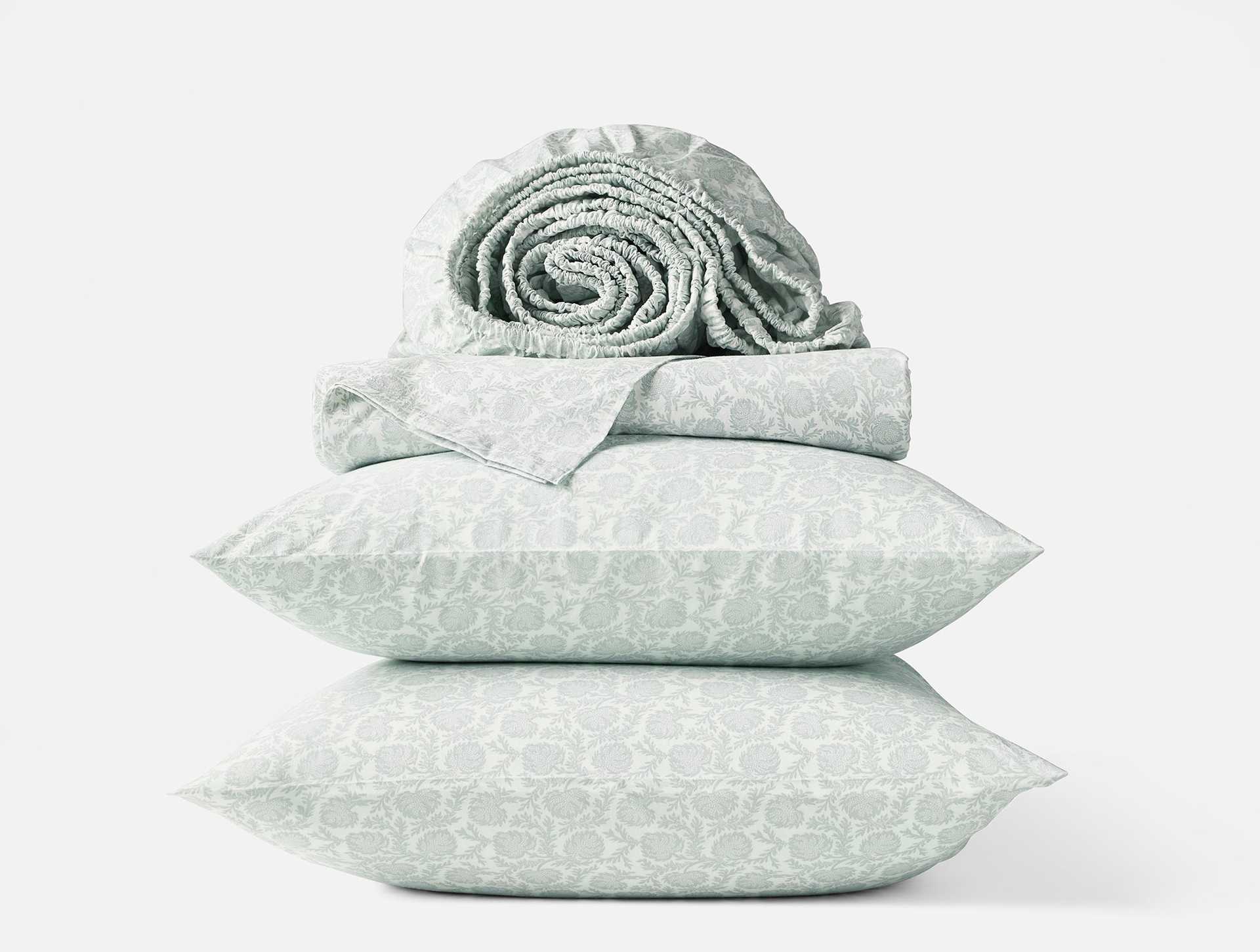
Coyuchi’s Organic Print Percale Sheet Set is made from 100% organic cotton and described as airy and cool to the touch. Nature-inspired prints bring color to the surface, while low-impact dyes and a plant-based softener are listed among its finishing details. The set includes a flat sheet, fitted sheet, pillowcase or pillowcases, and a matching fabric bag; exact pillowcase quantities depend on the set configuration.
Percale’s crispness is not necessarily a sign of stiffness. Cotton sheets often soften through use and washing, and product details for this style describe a fabric designed for everyday comfort. Some sleepers enjoy the sense of freshness that a crisper sheet brings; others prefer a smoother, more fluid surface from the beginning. That contrast is more useful than treating “soft” as a single measure of quality.
Printed percale offers another consideration: pattern. Nature-inspired designs can add color without changing the basic character of the weave. If your bedroom already has patterned quilts or coverlets, a quieter print or solid sheet may be easier to layer. If the rest of the room is restrained, a printed sheet can provide a focal point that feels close at hand rather than visually overwhelming.
Sateen: smooth, soft, and fluid
Sateen appeals to sleepers who like a smoother surface and a softer drape. It tends to lie more fluidly across the bed than crisp percale, creating a relaxed, enveloping impression. That feel can be especially welcome for those who enjoy a gentle, polished texture against the skin or prefer bedding with a little more visual weight.
Coyuchi’s Cloud Soft Organic Sateen fitted sheet is described as made from 100% organic cotton, with a smooth feel and rich drape. Its product details list a sateen construction and a USDA-certified bio-based softener called miDori bioSoft. Care guidance calls for a cold, gentle wash and low-heat tumble drying. Because this is a fitted sheet rather than a full set, check the product configuration and the rest of your bedding before choosing.
Sateen is sometimes assumed to be shiny, but the appearance can vary. Coyuchi describes its Cloud Soft sateen as comfortable without sheen, with a smooth surface and a draping quality. If shine is a concern, look at the specific fabric description rather than relying on the name alone. “Sateen” indicates a weave family; it does not promise the same look and feel across every product.
A smooth hand can make sateen feel especially inviting in cooler conditions or for people who like bedding that settles softly over the body. It may also be a good match for a bedroom styled with relaxed layers and gentle folds. Consider how it feels alongside your duvet cover, blanket, and sleepwear, since the entire bedding arrangement affects the sensation of warmth and weight.
Percale vs. sateen at a glance
| What to compare | Percale | Sateen |
|---|---|---|
| Typical feel | Crisp, light, and smooth | Softer, smoother, and more fluid |
| Surface character | Usually matte, with a fresh, structured hand | Often has a gentle drape; appearance varies by finish |
| Often suits | Warm sleepers and people who prefer a cool, crisp feel | Sleepers who favor softness and a more relaxed surface |
| Care planning | Follow the label; gentle washing helps maintain the fabric | Follow the label; avoid excessive heat and over-drying |
These are general tendencies, not guarantees. Room temperature, duvet weight, mattress materials, personal comfort, and individual product finishing can all shape the experience. A breathable sheet cannot compensate for an overly warm sleep environment, and a smooth sheet does not automatically feel warmer to every sleeper.
Start with the way you sleep
Your sleeping temperature is a practical place to begin. If you often kick off blankets, wake feeling overheated, or prefer a cool surface when you get into bed, percale may be worth considering. Its airy feel and crisp texture are commonly associated with a cooler impression. If you tend to feel comfortable under layers and enjoy fabric that settles smoothly around you, sateen may be the more appealing starting point.
Then consider how you move. Some people like the light, clean sensation of percale as they turn during the night. Others prefer sateen’s softer glide and drape. Think about whether you enjoy the feel of a freshly pressed shirt or a smooth, well-worn cotton garment. The comparison is imperfect, but it can help translate a product description into a tactile preference.
Skin sensitivity is another reason to pay attention to fabric details, although no weave can guarantee a particular health outcome. Organic certification can provide information about how textiles were produced under a defined standard. It does not mean that every person will have the same response to a sheet, nor does it replace advice from a qualified health professional when a skin condition is involved.
Read certifications and finishes carefully
The word “organic” is most useful when paired with clear information about certification. Several Coyuchi sheet listings in this collection name GOTS certification, and some also list Fair Trade certification. These are not interchangeable labels: each refers to a particular standard and scope. Check the product’s current details to confirm which materials and processes are covered.
Finishing details add another layer to the story. Coyuchi’s print percale sheet set lists low-impact dyes and a plant-based softener. Its Cloud Soft sateen fitted sheet lists a bio-based softener and describes the fabric as wrinkle-resistant. Such information can help shoppers compare production choices, but it is wise to read the exact wording rather than infer claims the product page does not make.
Origin information can also help set expectations and answer practical questions about a product’s supply chain. The listed percale sheet set is grown and woven in India. Product details may change, so check the current description for the selected size or color. Certification, material, construction, origin, and care instructions together offer a more complete picture than a single marketing phrase.
Care that supports a longer life
Good care begins with the label. For the Organic Print Percale Sheet Set, the listed guidance is to wash in cold water on a gentle cycle with like colors, tumble dry on low, and remove promptly. A warm iron may be used if desired. The Cloud Soft Organic Sateen fitted sheet also calls for a cold, gentle wash and low-heat tumble drying. Always follow the instructions supplied with the specific item you own.
Washing sheets only when needed, avoiding unnecessarily high heat, and not crowding the machine can help reduce wear. Removing cotton bedding promptly from the dryer may also limit deep creasing. If you prefer a relaxed look, you may not need to iron at all. If a crisp appearance matters to you, use the care guidance rather than turning to a hotter setting by default.
A matching fabric storage bag, included with the listed percale set, can be useful when sheets are rotated seasonally. Store clean bedding completely dry in a cool, dry place. Fold each set together or keep the pillowcases tucked into the folded sheet bundle so that the next change of bed linen is straightforward.
Fit matters as much as feel
A sheet that slips off a mattress can disrupt an otherwise comfortable night. Before buying, confirm the mattress size and measure its depth, including any topper. Compare that measurement with the fitted sheet’s pocket depth and check whether the product details mention a fit range. Mattress protectors and toppers add height, and a fitted sheet that is too shallow may not stay secure at the corners.
Set contents deserve the same attention. A sheet set may include different numbers of pillowcases depending on size, while a fitted sheet is sold individually. Check whether you need a flat sheet, additional pillowcases, or matching pieces before completing a bedding arrangement. Small details like these can prevent mismatches and help you avoid buying more than you need.
A simple decision guide
- Choose percale if you prefer a crisp, airy, cool-to-the-touch feel and a matte surface.
- Consider sateen if you like a smooth hand, softer drape, and a more relaxed surface.
- Compare product details if you care about prints, finishing, certifications, origin, or the contents of a set.
- Check fit before ordering by measuring mattress depth with any protector or topper in place.
- Use care instructions as written to help preserve the fabric and avoid unnecessary heat or strain.
You might also choose differently for different beds. A warmer bedroom or a hot sleeper’s bed may call for percale, while a cooler room or a preference for softness may point toward sateen. There is no rule that every sheet in a home must match. Comfort is personal, and a considered choice can be as simple as noticing which texture makes you want to settle in.
The best weave is the one you want to return to
Percale and sateen offer two distinct interpretations of organic cotton. Percale gives the bed a crisp, breathable character; sateen brings a smoother feel and softer drape. Looking beyond the names—to the stated materials, certification, finishing, fit, and care—helps turn a broad preference into a useful choice.
If a cool, fresh surface is what you seek, explore Coyuchi’s organic print percale. If smoothness and flowing softness matter more, compare the Cloud Soft organic sateen fitted sheet with your existing bedding. The right sheet is not simply a matter of weave or label. It is the one that suits your body, your room, and the small nightly rituals that make a bed feel like a place to rest.